

A steam boiler is a steam producing heating system; it produces energy by heating water to create steam. A steam boiler burns fuel to heat water. The combination of heat and water produces steam. Steam boilers are defined by their construction, portability, types of tubes, types of fuel, and the pressure they produce.
Benefits of Gas Steam Boiler
High efficiency and energy saving
The gas steam boiler adopts advanced combustion technology and efficient heat exchanger design. It can achieve high efficiency working state. Its combustion efficiency can usually reach more than 9096, which means that the boiler can convert most of the fuel into useful heat energy and reduce energy waste. In addition. The gas steam boiler also has the characteristics of fast start and stop, and can flexibly adjust the working mode according to actual needs to achieve optimal energy utilization.
Clean and environmentally friendly
Compared with traditional coal-fired boilers, gas steam boilers produce much less pollutants during combustion. Gas combustion only produces a small amount of carbon dioxide water vapor and a small amount of nitrogen oxides, and almost no particulate matter and sulfide emissions, which greatly reduces the impact on air quality and the surrounding environment. At the same time, there is no coal ash produced by coal-fired boilers during gas combustion, which reduces the pollution to the environment and the difficulty of treatment.
Stable and reliable combustion
The gas steam boiler adopts an advanced combustion control system, which can automatically adjust the mixing ratio of gas and air to ensure the stability and efficiency of combustion. It has the characteristics of low noise, low vibration and low emissions. It can not only provide reliable heating services, but also reduce the need for maintenance and repairs, and extend the service life of the equipment.
Flexibility and adaptability
The gas steam boiler is easy to use and can adjust the working mode flexibly according to actual needs. It can automatically adjust the gas supply according to the load demand to achieve dynamic balance. At the same time, the gas steam boiler can be linked with other equipment for efficient operation of the entire system. Whether in industrial production or in the field of commercial and domestic heating, gas steam boilers can provide a stable and reliable supply of heat energy.
Safety and reliability
The gas steam boiler has advanced safety protection devices, such as a visual combustion control system, overheating protection system, and drain device, which can detect and handle abnormal situations in time to ensure the safe operation of the equipment. In addition, the gas steam boiler has a simple structure, is easy to repair and maintain, and reduces the possibility of equipment failure.


Why Choose Us
Our Company
We have more than 130 employees and cover an area of 108 acres, with a total construction area of 29,800 square meters. The first production workshop is 6,800 square meters, the second production workshop is also 6,800 square meters, and the third production workshop is 13,600 square meters. The research and development lab covers 2,600 square meters, the office research and development building is 3,000 square meters, and the living quarters span 1,380 square meters.
Honors and Qualifications
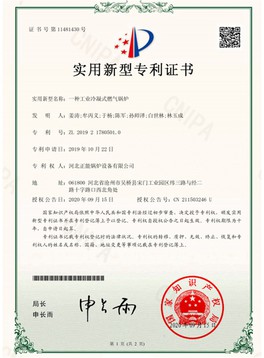
The company has obtained an A2-level pressure vessel license, an A-level boiler manufacturing license, a pipeline pressure fitting license, and GB2 and GC2 pipeline installation licenses. We have also passed ISO 9001 quality management system certification and have been recognized as a high-tech enterprise in Hebei Province.
Production Equipment
Our excellent facilities and manufacturing equipment are guarantees of quality products. Our company has invested in advanced processing and testing equipment from both domestic and international sources, including a laser CNC cutting machine, a CNC drilling machine, automatic submerged arc welding machines, automatic cylinder circular seam welding machines, and real-time online imaging testing equipment. These ensure the reliability of our product quality.
Our Service
The company has a comprehensive after-sales service network to provide full support for your needs. We aim to help you achieve satisfaction with our equipment and ensure that any issues encountered during use are resolved promptly, with our thoughtful service.
Water tube boilers
Water tube boilers are becoming increasingly popular as they are probably the most versatile type of boiler. In this type of boiler, water is inside a series of tubes that connect the lower mud drum at the bottom of the boiler to the steam drum at the top of the boiler. When the boiler is running, combustion gases flow around the tubes, heating up the water inside and producing steam.
This type of boiler is best utilized when facilities need large amounts of steam are required, usually tens of thousands of pounds per steam every hour. Water tube boilers can be especially useful because they' re able to produce steam quickly, as there is little delay between turning the boiler on and producing steam. They also have a lower water content than some other types of boilers, which helps make them inherently safer and allows them to respond quickly to changing steam demand.
Fire tube boilers
Fire tube boilers have been around for a long time because of their ability to meet steam needs when the demand is large and constant. These pressure vessels are filled with water while the gas used to heat the water is kept inside a series of tubes. The key to a fire tube boiler is having the boiler, burner, and control scheme all working in conjunction with one another to produce the steam and pump it where it needs to go. They are common for any steam or hot water application that requires between 15 and 2,200 horsepower.
Electric boilers
Compared to both water tube and fire tube boilers, electric boilers are much smaller and quieter. The biggest difference between electric and other boilers is that they have no exhaust stack and they don' t use fuel. This makes them easier to operate than both water tube and fire tube boilers. Also, since no fuel is being used, there are no emissions of NOx or other types of greenhouse gases. This makes electric boilers vital for areas that have tight emission restrictions for those types of substances. The catch is that they are only worthwhile when the cost of electricity is reasonable; otherwise, they can be expensive to operate and some of the convenience they provide may not be worthwhile.
Condensing boilers
Condensing boilers can be the most efficient type of boiler, as they condense water vapor into exhaust gases to produce steam. These boilers will recover part of the latent heat from evaporation that usually has no purpose and is otherwise wasted by other types of boilers. As long as the temperature of the return water is less than 110 degrees, it' ll be useful for a condensing boiler. The cooler the return water, the more efficient the condensing boiler will be, sometimes reaching up to 98% efficiency, which is significantly higher than both water tube and fire tube boilers. What Type is Best? Ultimately, determining how much steam you need will be your best indicator for choosing what type of boiler is best. For any type of large-scale operation that requires thousands of pounds per steam every hour, a water tube boiler will usually be the best choice. The ability of water tube boilers to meet high steam demands and quickly adjust to changing needs is something that no other type of boiler can match.

Gas steam boilers are widely used in industrial settings for their efficiency and reliability in providing heat and power. However, like any piece of machinery, regular maintenance is essential to ensure they continue to operate smoothly and efficiently. One of the most important aspects of gas steam boiler maintenance is regular inspection and cleaning of the boiler. This includes checking for any signs of wear and tear, leaks, or corrosion. Any issues should be addressed promptly to prevent them from escalating and causing damage to the boiler. In addition to visual inspection, it is also important to check and clean the boiler' s components, such as the burners, heat exchanger, and controls. Cleaning these parts will help prevent the buildup of dirt and debris that can affect the boiler' s efficiency and performance.
Regularly checking and maintaining the boiler' s water level is also important to prevent damage to the boiler' s heating elements and ensure it operates efficiently. Low water levels can cause the boiler to overheat, while high water levels can lead to reduced steam production and inefficient operation. In addition to regular maintenance tasks, it is important to schedule annual servicing by a qualified technician. A professional boiler technician will be able to thoroughly inspect and test the boiler to identify any potential issues and make any necessary repairs or replacements. Proper maintenance of a gas steam boiler can help extend its lifespan, improve its efficiency, and reduce the risk of breakdowns and costly repairs. By following a regular maintenance schedule and addressing any issues promptly, you can ensure your boiler continues to operate safely and efficiently for years to come.
Steam boilers have a wide range of applications in industry, with major uses including power generation, heating, industrial production, steam power, cleaning and disinfection, the textile industry, heating systems, and concrete curing. First, steam boilers are used in power stations to generate steam to drive steam turbines to generate electricity. Secondly, steam boilers are widely used in industrial production for processes such as heating reactors, distillation, evaporation and drying. Steam boilers also power industry, driving a variety of equipment such as steam turbine-driven compressors, pumps and fans. Additionally, the sterilizing and disinfecting properties of steam boilers make them useful for cleaning and sterilization in medical facilities, laboratories, and food processing. In the textile industry, steam boilers are used to heat and moisten fibers and provide thermal energy during dyeing and finishing processes. At the same time, it also provides energy for heating systems to provide heating for industrial buildings, offices, schools, etc. Finally, steam boilers are used in building and construction to heat concrete to cause it to solidify and harden. Overall, steam boilers play a key role in industry, providing necessary thermal energy support in multiple areas.
The basic working principle of a gas fired boiler is based on burning gas in the furnace to release high-temperature heat energy. By heating the water in the boiler, the water is heated and evaporated, and finally stable and controllable steam is produced. This thermal energy conversion process mainly involves two key aspects: combustion process and thermal energy conversion.
Fuel, usually natural gas or LPG, is piped into the combustion chamber. In the combustion chamber, the ignition system triggers the ignition process, causing the combustion of gas. This combustion process is a chemical reaction in which fuel partially burns with oxygen in the air, producing heat, water vapor and carbon dioxide.
The entire combustion process is carried out quickly and accurately in the gas fired boiler to ensure efficient energy conversion, maximize the use of fuel energy, and provide a stable heat source for the heating system. The control and optimization of this process is a key consideration in the design of modern gas boilers, aiming to increase thermal efficiency, reduce emissions, and ensure equipment reliability.
Enter the heat energy conversion stage, which is the process of burning fuel to generate high-temperature flames, and then transferring this heat energy to the water in the boiler, and finally heating the water into steam or providing hot water. This is the core function of the gas fired boiler. Through this A process in which water is heated and converted into hot water or steam, depending on the design and purpose of the boiler.
The hot water or steam generated is then transported to areas that require heating, such as heating systems or industrial processes, to meet the corresponding energy needs. The entire process achieves efficient conversion from the chemical energy of fuel to practical thermal energy, making gas fired boilers widely used in fields such as heating, production and power generation.

Furnace
The furnace is the combustion chamber, where the gas burns. The shape of the furnace can be cylindrical or rectangular, and its inner wall is made of high-temperature wear-resistant material, which can withstand high temperature and high pressure.
Burner
A burner is a device that mixes natural gas with air and burns it. Its function is to provide the combustion conditions of the fuel so that the fuel can be fully burned and release heat energy. Burners typically include gas nozzles, fans and regulators.
Gas supply system
The gas supply system is responsible for delivering natural gas to the burners. It includes components such as gas pipelines, filters, pressure regulators and safety valves. The gas supply system needs to ensure a stable supply of gas and a constant pressure.
Flue gas treatment system
The flue gas treatment system is used to treat the flue gas produced by combustion. It includes chimney, flue gas purification device and exhaust gas discharge system. The chimney is used to discharge flue gas, the flue gas purification device is used to remove harmful substances in the flue gas, and the exhaust gas discharge system is used to discharge the purified flue gas into the atmosphere.
Steam generator
The steam generator is the part that heats water and converts it into steam. It usually consists of a kettle, a pipe and a steam drum. The kettle is the main part of the steam generator, in which the water is heated by the heat of combustion and converted into steam. The flue pipe is used for heat exchange between flue gas and water to increase the temperature of the water. The steam drum is used to collect and store the steam generated.
Control system
The control system is used to monitor and control the operation of the natural gas steam boiler. It usually includes temperature sensors, pressure sensors, flow meters and automatic control devices. The temperature sensor is used to measure the temperature of the combustion chamber and steam, the pressure sensor is used to measure the pressure of gas and water, and the flow meter is used to measure the flow of gas and water. The automatic control device controls the gas supply and combustion conditions by analyzing and comparing the sensor signals to maintain the stable operation of the steam boiler.
Our Factory
Hebei Zhengneng Boiler Equipment Co., Ltd. was established in August 2013, is a focus on the development, production and sales of science and technology production enterprises
Hebei Zhengneng Boiler Equipment Co., Ltd. has more than 130 employees. Covers an area of 108 acres, the total construction area of 29,800 square meters, the first production workshop 6800 square meters. The second production workshop is 6,800 square meters, the third production workshop is 13,600 square meters, the research and development experiment workshop is 2,600 square meters, the office research and development building is 3,000 square meters, and the living building is 1,380 square meters.


Certifications
The company has obtained A2-level pressure vessel license, A-level boiler manufacturing license, pipeline pressure fitting license, GB2 and GC2 pipeline installation license, and passed ISO9001 quality management system certification, and won the high-tech enterprise of Hebei Province.


FAQ
We're professional gas steam boiler manufacturers and suppliers in China, specialized in providing high quality customized service. We warmly welcome you to buy gas steam boiler at competitive price from our factory. Contact us for quotation.
steam boiler takeover, steam boiler reliability, steam boiler notifications