

Hebei Zhengneng Boiler Equipment Co., Ltd. was established in August 2013, is a focus on the development, production and sales of science and technology production enterprises.Our company has purchased laser CNC cutting machine, CNC drilling machine, automatic submerged arc welding, automatic cylinder circular seam welding machine, real-time online imaging testing and other advanced processing and testing equipment from home and abroad, which provides reliable guarantee for excellent product quality.
Why Choose Us
Professional technology
Backed by a dedicated R&D team, every product undergoes meticulous development and rigorous quality assurance, ensuring the highest level of professionalism and reliability.
Custom made
We offer a wide variety of specifications for you to choose from, and we also provide customized products tailored to your specific needs, ensuring comprehensive solutions to meet all your requirements.
Honors and Qualifications
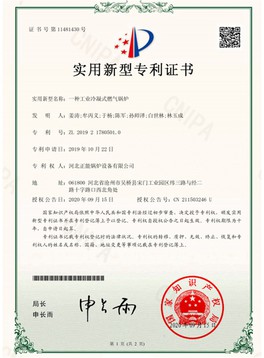
The company has obtained an A2-level pressure vessel license, an A-level boiler manufacturing license, a pipeline pressure fitting license, and GB2 and GC2 pipeline installation licenses.
Our Service
The company has a comprehensive after-sales service network to provide full support for your needs.


|
Model |
Boiler HP |
Steam Output (lbs/hr) |
kW |
Dimensions (w x l x h) |
|
PSE-12 |
1.2 |
41 |
12 |
22 x 29 x 31” |
|
PSE-18 |
1.8 |
62 |
18 |
22 x 29 x 31” |
|
PSE-24 |
2.4 |
83 |
24 |
22 x 29 x 31” |
|
PSE-30 |
3.0 |
104 |
30 |
22 x 29 x 39” |
|
PSE-36 |
3.6 |
124 |
36 |
22 x 29 x 39” |
|
PSE-48 |
4.8 |
166 |
48 |
26 x 31 x 45” |
|
PSE-60 |
6.0 |
207 |
60 |
26 x 31 x 45” |
|
PSE-72 |
7.2 |
248 |
72 |
26 x 31 x 45” |
|
PSE-108 |
10.8 |
373 |
108 |
26 x 32 x 55” |
Product features
We manufactures steam boilers as 3-pass shell type steam boilers individually “tailor-made” according to customer requirements.
The main advantage of this design is that a constantly high steam quality can be guaranteed even during short-term power fluctuations.
Steam Boiler systems have a very long service life.
The output spectrum of Steam Boiler plants ranges from 1,000 kg/h to 60,000 kg/h steam.
In principle, Steam Boilers are fired with liquid and/or gaseous fuels.
Waste heat steam boilers are individually designed for a wide variety of applications, such as behind gas turbines or gas engines.
Stable and easy-to-operate boiler door systems facilitate inspection and maintenance procedures.
Generously dimensioned flame tubes with low heat load guarantee excellent combustion and thus reduce the emission of carbon monoxide and nitrogen oxides.

Types of Steam Boiler
Fire Tube Boiler
The most common type of boiler system especially for industrial uses, fire tube boilers, has been around for a long time because of their ability to meet steam needs when the demand is large and constant.
Water Tube Boiler
Water-tube boilers are becoming increasingly popular as they are probably the most versatile type of boiler system. With this type of boiler, the water runs through a series of tubes that connect the lower mud drum at the bottom of the boiler to the steam drum at the top.
Electric Boiler
Compared to both the water tube and fire tube boilers, electric boilers are much smaller and quieter. The biggest difference between electric and other boilers is that they have no exhaust stack and they don't use fossil fuels like oil or natural gas, basically eliminating emissions of NOx or other types of greenhouse gases.
Condensing Boiler
Condensing boilers can be the most efficient type of boiler, often achieving a fuel-to-steam efficiency rate of up to 99 percent. These boilers recover part of the latent heat from unused water vapor that is wasted by other types of boilers by returning it to combine with the boiler water.
Application of Steam Boiler
Industrial Heating: Powering Industrial Processes
One of the primary applications of steam boilers is in industrial settings, where they serve as the backbone of numerous heating processes. Industries such as manufacturing, chemical production, food processing, textiles, and pharmaceuticals rely on steam boilers to provide the heat necessary for a wide range of applications.
Low-Pressure Systems: Specialized Applications
While steam boilers are commonly associated with high-pressure systems, they also find applications in low-pressure settings.
Commercial Heating: Efficient Space Heating
Steam boilers also play a vital role in commercial heating, providing efficient space heating solutions for buildings, hotels, schools, hospitals, and other large-scale facilities.
Pressure Applications: Adapting to Varied Needs
Steam boilers are engineered to meet different pressure requirements, making them adaptable to a wide range of applications. High-pressure steam boilers are commonly used in industries where high temperatures and pressures are necessary for specific processes, such as power generation, chemical reactions, or steam turbines.
Key Components of Steam Boilers
Vapor Generation Unit
At the heart of the system, the vapor generation unit is responsible for converting water into vapor. It typically includes a heat source and a vessel where the transformation occurs.
Safety Mechanisms
Safety is paramount in vapor generation systems, and several components are dedicated to ensuring the system operates within safe parameters.
Control Systems
Modern vapor generation systems are equipped with sophisticated control systems that optimize performance and energy usage.
Feedwater Systems
Feedwater systems are integral to the continuous operation of vapor generation units, providing a steady supply of water to replace that which has been converted into vapor.
Our 4 Step Order Process
Order acceptance
10% Customer Deposit required when order is placed
Lead in time agreed
Manufacture timescale agreed with customer
Testing & approval
Boiler tested, Certified & Stamped
Balance payment
Collection or Delivery (P&P Extra)
Shipping Instructions for Steam Boiler
Generally speaking, the transportation methods of we boilers are divided into railway transportation, car transportation, water transportation, and air transportation for some small boilers.
If customers have full railway transportation needs, they should also carry out customized transportation depending on the volume and weight of the goods, and try to ship them in containers to solve the problem of transit.
For boilers exported to Bangladesh, we often take containers or bulk carriers. For water transportation, the most worrying thing is the weather at sea. Special attention should be paid to the packaging of the boiler to prevent the boiler from being corroded by rainwater or seawater.
Our Certifications


FAQ
We're professional steam boiler manufacturers and suppliers in China, specialized in providing high quality customized service. We warmly welcome you to buy steam boiler at competitive price from our factory. Contact us for quotation.