

A oil fired steam boiler is a type of boiler that uses oil as its fuel source to create steam. Steam is then used to provide heat for a variety of applications, such as space heating, water heating, and industrial processes.
Benefits of Oil Fired Steam Boiler
High Efficiency and Energy Savings
Modern oil steam boilers are designed to be highly efficient, converting a large percentage of the fuel they consume into usable heat. This efficiency translates into energy savings, as less fuel is required to produce the same amount of heat compared to older or less efficient systems.
Reliable and Consistent Heat Supply
Oil steam boilers provide a reliable and consistent heat supply, ensuring that your home or business remains comfortable throughout the heating season. The steam produced by these boilers is distributed evenly throughout the building, providing consistent warmth in every room.
Fuel Flexibility and Availability
Oil is a widely available fuel source, making it easy to find and purchase for your steam boiler. Additionally, oil steam boilers can often be converted to use alternative fuels, such as natural gas or propane, providing even greater flexibility.
Environmentally Friendly
Modern oil steam boilers are designed to be environmentally friendly, with lower emissions compared to older models. This means that choosing an oil steam boiler can help reduce your carbon footprint and contribute to a cleaner environment.
Durable and Long-Lasting
Oil steam boilers are built to last, with many models boasting a lifespan of 20 years or more. This durability means that investing in an oil steam boiler can provide long-term value and reliable performance.


Why Choose Us
Our Company
We have more than 130 employees and cover an area of 108 acres, with a total construction area of 29,800 square meters. The first production workshop is 6,800 square meters, the second production workshop is also 6,800 square meters, and the third production workshop is 13,600 square meters. The research and development lab covers 2,600 square meters, the office research and development building is 3,000 square meters, and the living quarters span 1,380 square meters.
Honors and Qualifications
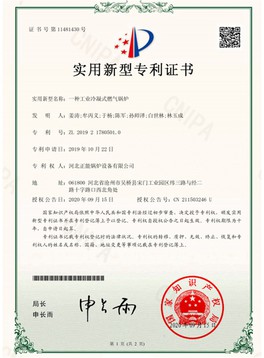
The company has obtained an A2-level pressure vessel license, an A-level boiler manufacturing license, a pipeline pressure fitting license, and GB2 and GC2 pipeline installation licenses. We have also passed ISO 9001 quality management system certification and have been recognized as a high-tech enterprise in Hebei Province.
Production Equipment
Our excellent facilities and manufacturing equipment are guarantees of quality products. Our company has invested in advanced processing and testing equipment from both domestic and international sources, including a laser CNC cutting machine, a CNC drilling machine, automatic submerged arc welding machines, automatic cylinder circular seam welding machines, and real-time online imaging testing equipment. These ensure the reliability of our product quality.
Our Service
The company has a comprehensive after-sales service network to provide full support for your needs. We aim to help you achieve satisfaction with our equipment and ensure that any issues encountered during use are resolved promptly, with our thoughtful service.
The key factors affecting the fuel consumption of an oil boiler include the boiler’s heating area, fuel calorific value, fuel purity, convection heating area, and radiation heating area.
The heating area of the boiler is inversely proportional to fuel consumption. A larger heating area results in less fuel consumption.
The fuel calorific value is also inversely proportional to fuel consumption. Higher calorific value fuels lead to less fuel consumption.
Fuel purity is inversely proportional to fuel consumption. Higher purity fuels have a higher heat value, resulting in less fuel consumption.
The convection heating area of the boiler is inversely proportional to fuel consumption. A larger convection heating area means less fuel consumption.
Similarly, the radiation heating area of the boiler is inversely proportional to fuel consumption. A larger radiation heating area results in less fuel consumption.
In addition to the boiler itself, the fuel consumption of an oil-fired boiler is closely related to the operational experience of the furnace operators. Not only is fuel efficiency important, but safe operation of the boiler is also crucial. Therefore, relevant state departments require that furnace operators hold the necessary certification to ensure responsibility for users, the operators, and society.
Parameter Oil Fired Steam Boiler
|
Model |
Evaporation capacity |
Steam temperature |
Shipping size(m) |
|
WNS0.3-0.7-YQ |
0.3T/H |
170℃ |
2.46×1.16×1.5 |
|
WNS0.5-1.25-YQ |
0.5T/H |
194℃ |
3.2×2.36×2.6 |
|
WNS1-1.25-YQ |
1T/H |
194℃ |
3.9×1.87×2.1 |
|
WNS2-1.25-YQ |
2T/H |
194℃ |
4.1×1.9×2.2 |
|
WNS4-1.25-YQ |
4T/H |
194℃ |
4.87×2.15×2.64 |
|
WNS6-1.25-YQ |
6T/H |
194℃ |
5.32×2.23×2.63 |
|
WNS8-1.25-YQ |
8T/H |
194℃ |
6.01×2.9×3.27 |
|
WNS10-1.25-YQ |
10T/H |
194℃ |
6.86×2.9×3.27 |
|
WNS20-1.6-YQ |
20T/H |
204℃ |
9.3×2.3×3.84 |

Fire tube boiler
Fire tube boilers are widely used in small to medium sized factories and are a traditional type of boiler. By burning fuel, a high temperature flame is produced and heat is transferred through pre-installed spiral or linearly arranged tubes inside the boiler, which in turn heat the surrounding water to produce steam. It is a relatively simple design and the most affordable type of steam boiler.
Water tube boiler
Water tube boilers are widely used in intensive industries and offer higher thermal efficiency. Steam is obtained by directly heating the water tubes inside the boiler through the high temperature gases produced by the combustion of fuel. Water tube boilers are able to withstand higher pressures than fire tube boilers.
Circulating fluidized bed boiler
Circulating fluidized bed boilers use a special combustion technology that utilises a bed of solid particles to achieve the combustion process. In a circulating fluidised bed, a bed of solid particles is kept circulating in the bed by the flow of gas or liquid. The fuel and solid particles are mixed and burned in the bed to produce high temperature gases and to transfer heat energy to the water. This design offers good combustion and heat transfer efficiency and can be adapted to a wide range of different fuel types.
Waste heat boilers
Waste heat boilers use the waste heat generated by industrial processes to produce steam. In many industrial processes, heat energy is often emitted to the atmosphere in the form of waste heat. Waste heat boilers convert this waste heat into steam energy by recovering and utilising it. This type of boiler is important in terms of improving energy efficiency and reducing environmental pollution.
Burner
Air and fuel are injected into the combustion region via the burner. Fuels need to combine with air easily, such as oil, gas, or finely ground coal. The amount of air that enters the burner is controlled via dampers. The air is distributed uniformly around the burner by an impeller. An igniter lights the fuel that is injected into the boiler using pipes known as spuds.
Heat Exchanger
The heat exchanger prevents the fluids from mixing while allowing for the exchange of heat. In a heat exchanger, the fluid to be heated is submerged in a long, coiled pipe. Through the pipe, gas or a hot liquid warms the water nearby. The ideal material for heat exchangers is stainless steel since it won' t corrode or rust. However, heat exchangers may be formed of a number of materials.
Steam Temperature Control
Thermal stress may be avoided by carefully controlling the temperature of the steam. In order to reduce fuel expenses, pressure and temperature control are required. Water jets are often used to regulate steam temperature on the first and second-stage superheaters. This is accomplished with the use of an attemperator or desuperheater.
Flue gas bypass, circulation, and the angle at which the burners fire the furnace are other ways to regulate steam temperature. The easiest way to regulate steam temperature is to keep an eye on the steam' s temperature as it leaves the boiler and adjusts the spray water valve.
Combustion Chamber
The combustion chamber holds the fuel and air interaction and utilizes the heat produced to make steam. The combustion chamber must be suitably insulated to prevent heat loss through radiation in order to increase efficiency. The open box with the burner and controls and the combustion chamber are connected by tubes that carry steam and water. Boiler functioning depends heavily on efficient combustion. The surface of the boiler at the top of the combustion chamber absorbs the heat generated in the combustion chamber.
Expansion Tank
By providing a space for water to expand, absorb pressure, and control pressure, the expansion tank aids in maintaining the pressure in a boiler. A diaphragm in the tank is separated into two portions, one of which receives water from the boiler and the other of which is controlled by an air valve to release pressure. When the pressure returns to normal, the air valve pushes against the water in the opposite part.
Low Water Cutoff
When the water level falls below a certain level, a low water cutoff turns off the burner or cuts off fuel to a steam boiler. A dry fired boiler is susceptible to rupture or serious failure. A steam boiler' s low water cutoffs are yet another safety element that helps protect the boiler from danger and damage. They are often used in steam boilers and hydronic devices to shut down the boiler in the event of a water loss and are a standard component of boiler construction.
Safety Relief Valve
For usage with steam boilers, the pressure release valve is the most crucial safety feature. It guarantees that the pressure that has built up in a steam boiler will be released; this helps prevent a catastrophic accident. Once the pressure has returned to normal, the pressure relief valve closes. It opens when the pressure exceeds a critical level.
10 Key Considerations for Choosing a Good steam Boiler
Safety
Safety is the foremost and essential factor to consider while choosing a Steam boiler. As steam boilers with high or low pressures can be dangerous, one needs to be cautious while handling them. Hence, while selecting the required steam boiler, look for its safety system. A boiler with a low water content design makes the catastrophic explosion impossible.
Cost
Calculating the Cost of the boiler for the long term purpose is also essential. One should not purchase a cheap boiler and then spend more on their repair and maintenance later on. Although Price is important, consider the overall cost of operation while choosing a Steam Boiler. Different factors such as rated capacity, pressure, temperature, fuel type, and run hours are crucial to select an efficient boiler. As Cost and efficiency go hand in hand, we should give these specifications of Boiler' s Performance attention.
Reliability
For a smooth business run, a steam boiler should run smoothly as well. The reliability and durability of the boiler system is another important factor. High mass boilers have thick metal used in the manufacturing of pressure vessels, leading to an increase in the boiler' s durability. Hence, industrialists should choose reliable machinery with a long lifespan.
Fuel Sources
The type of fuel needed to generate heat should consider knowing the resources available with the Industrialist. Steam boilers system uses coal, natural gas, biomass, and other energy to generate heat. Such Coal boilers are pretty costly with High emissions, whereas Biomass boilers are most economical and cheaply and readily available.
Ease of Maintenance
One needs to consider the period of maintenance a boiler needs to work efficiently for an extended period. A well-maintained boiler system involves suitable pressure vessels, water treatment, Tanks, and reverse osmosis systems. Hence, Look for an effective monitoring and control Boiler system with a support plan for routine maintenance issues. And Govern their upkeep and maintenance from time to time for smooth functioning.
Size
The less space a boiler occupies, the better. A boiler with a low footprint is better for both space and money. Industrialists should take proper measurements before Purchasing any steam boiler. Also, they should consider the space required for maintenance as well in the overall Footprint.
Steam Boiler Emission
Due to the increase in air pollution, the atmospheric gas emission limit is an essential factor to consider. Earlier, there were limits on the region of provenance. One must choose a steam boiler to reduce harmful emissions of gases according to Thai laws & regulations.
Combustion Technology
One should look for a High turndown level while maintaining good combustion efficiency. A boiler' s Thermal and combustion efficiency is essential for the burner' s performance. Industrial Boilers burns coal, biomass and fluids using different combustion Technologies such as low NOx burner. Here, effective turndown measures the lowest level of fuel input and air adjustment for good combustion efficiency.
Start-Up Time
Time is Money! One needs steam in a narrow time frame. Water-tube boilers are such boilers that require less startup time and convert water into steam in a short period. Hence one should consider boilers with 5 to 20 minutes of startup time for efficient usage.
Low Heat Flux and High Heating Surface Area
A boiler heating surface area should be relatively large, leading to high boiler efficiency, low exhaust gas temperature, and fuel consumption with fully utilised heat from fuel combustion. Boilers with higher firesides surface area values indicate high heat transfer efficiency. And the wetted heating surface determines heat flux. Hence, boilers with high firesides and wetted heating surfaces are considered efficient steam boilers.
Regular maintenance and servicing
Regular maintenance and servicing is essential to ensure the proper operation of steam boilers. This includes regularly cleaning the various parts of the boiler, checking and replacing damaged parts, and carrying out systematic inspections and tests. Through regular maintenance, potential problems can be identified and resolved, extending the life of the boiler and improving its operational efficiency.
Safe operating practices
Safe operation is the key to ensuring that steam boilers are safe to operate. Operators should be professionally trained in the operating procedures and safety protocols of the boiler. They should be familiar with operational requirements such as start-up and shut-down procedures, combustion control, water level control and pressure control. Strict adherence to these requirements can reduce the risk of accidents and operational errors.
Compliance requirements
Industrial steam boilers must be operated in accordance with relevant regulations and standards. These regulations and standards may cover requirements for the design, installation, operation and maintenance of the boiler. Companies should be aware of and comply with relevant national, regional and industry regulations to ensure boiler compliance, and carry out the necessary audits and permits.
Testing and monitoring
Boilers should be equipped with appropriate testing and monitoring equipment to monitor their operational status in real time. Such equipment may include water level controls, pressure gauges, thermometers and combustion controls. By monitoring key parameters, abnormalities can be detected and appropriate action taken in time to ensure the safe operation of the boiler.
Staff training and awareness-raising
In addition to regular maintenance and safe operational measures, training and raising the safety awareness of staff is vital. Employees should be aware of the basic working principles, safe operating procedures and emergency measures for boilers. Regular training courses and safety drills are organised to improve employees' knowledge and response to boiler safety.

Our Factory
Hebei Zhengneng Boiler Equipment Co., Ltd. was established in August 2013, is a focus on the development, production and sales of science and technology production enterprises
Hebei Zhengneng Boiler Equipment Co., Ltd. has more than 130 employees. Covers an area of 108 acres, the total construction area of 29,800 square meters, the first production workshop 6800 square meters. The second production workshop is 6,800 square meters, the third production workshop is 13,600 square meters, the research and development experiment workshop is 2,600 square meters, the office research and development building is 3,000 square meters, and the living building is 1,380 square meters.


Certifications
The company has obtained A2-level pressure vessel license, A-level boiler manufacturing license, pipeline pressure fitting license, GB2 and GC2 pipeline installation license, and passed ISO9001 quality management system certification, and won the high-tech enterprise of Hebei Province.


FAQ
We're professional oil fired steam boiler manufacturers and suppliers in China, specialized in providing high quality customized service. We warmly welcome you to buy oil fired steam boiler at competitive price from our factory. Contact us for quotation.
Waste Oil Fired Steam Boiler