

As a seasoned supplier in the hot water boiler industry, I've encountered numerous inquiries regarding the disparities between direct-fired and indirect-fired hot water boilers. Understanding these differences is crucial for customers to make informed decisions when selecting the most suitable boiler for their specific needs. In this blog, I'll delve into the intricacies of both types, highlighting their features, advantages, and limitations.
Direct-Fired Hot Water Boilers
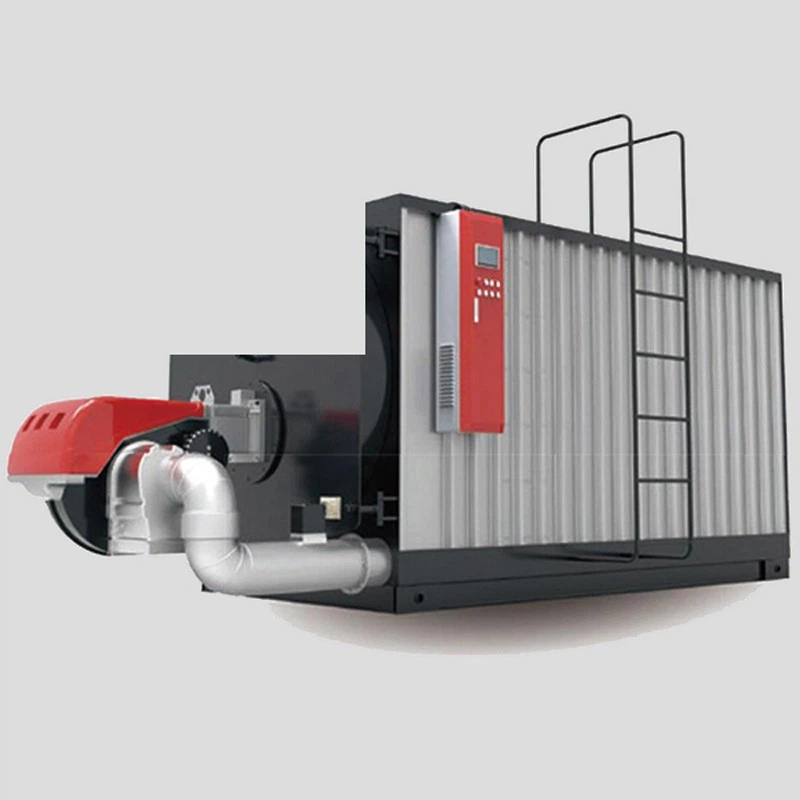
Direct-fired hot water boilers are designed to heat water directly by burning fuel within the boiler. These boilers typically use natural gas, propane, or oil as fuel sources. The combustion process occurs inside the combustion chamber, where the fuel is mixed with air and ignited. The heat generated from the combustion is then transferred to the water circulating through the boiler.
One of the primary advantages of direct-fired boilers is their efficiency. Since the heat is transferred directly to the water, there is minimal heat loss, resulting in higher energy efficiency and lower operating costs. Additionally, direct-fired boilers can provide instant hot water, making them ideal for applications that require a continuous supply of hot water, such as commercial buildings, hospitals, and hotels.
Another benefit of direct-fired boilers is their compact size. These boilers are relatively small and can be easily installed in limited spaces. This makes them a popular choice for applications where space is a constraint, such as residential apartments and small commercial establishments.
However, direct-fired boilers also have some limitations. One of the main drawbacks is the potential for emissions. The combustion process in direct-fired boilers produces pollutants such as carbon monoxide, nitrogen oxides, and particulate matter. These emissions can have a negative impact on the environment and human health. To mitigate these concerns, modern direct-fired boilers are equipped with advanced combustion technologies and emission control systems to reduce their environmental footprint.
Indirect-Fired Hot Water Boilers
Indirect-fired hot water boilers, on the other hand, use a separate heat source to heat the water. These boilers typically work in conjunction with a primary heating system, such as a furnace or a boiler. The heat from the primary heating system is transferred to a heat exchanger, which then heats the water in the indirect-fired boiler.
One of the key advantages of indirect-fired boilers is their flexibility. Since they rely on a separate heat source, they can be used with a variety of primary heating systems, including gas, oil, or electric boilers. This allows customers to choose the most suitable primary heating system based on their specific needs and preferences.
Another benefit of indirect-fired boilers is their safety. Since the combustion process occurs in a separate unit, there is no direct contact between the fuel and the water. This reduces the risk of explosions and other safety hazards. Additionally, indirect-fired boilers are less likely to produce emissions compared to direct-fired boilers, making them a more environmentally friendly option.
However, indirect-fired boilers also have some limitations. One of the main drawbacks is their lower efficiency compared to direct-fired boilers. Since the heat has to be transferred through a heat exchanger, there is some heat loss, resulting in lower energy efficiency and higher operating costs. Additionally, indirect-fired boilers may require more maintenance compared to direct-fired boilers, as the heat exchanger needs to be cleaned and inspected regularly to ensure optimal performance.
Comparing Direct-Fired and Indirect-Fired Hot Water Boilers
To better understand the differences between direct-fired and indirect-fired hot water boilers, let's compare them based on several key factors:

Efficiency
As mentioned earlier, direct-fired boilers are generally more efficient than indirect-fired boilers. This is because the heat is transferred directly to the water, resulting in minimal heat loss. Indirect-fired boilers, on the other hand, require a heat exchanger to transfer the heat, which can result in some heat loss and lower efficiency.
Instant Hot Water
Direct-fired boilers can provide instant hot water, making them ideal for applications that require a continuous supply of hot water. Indirect-fired boilers, on the other hand, may take some time to heat up the water, especially if the primary heating system is not operating at full capacity.
Space Requirements
Direct-fired boilers are typically more compact than indirect-fired boilers, making them a better choice for applications where space is a constraint. Indirect-fired boilers, on the other hand, may require more space to accommodate the primary heating system and the heat exchanger.
Emissions
Direct-fired boilers produce emissions as a result of the combustion process. While modern direct-fired boilers are equipped with advanced emission control systems to reduce their environmental footprint, they still produce some pollutants. Indirect-fired boilers, on the other hand, produce fewer emissions since the combustion process occurs in a separate unit.
Cost
Direct-fired boilers are generally more expensive to purchase than indirect-fired boilers. However, they may have lower operating costs due to their higher efficiency. Indirect-fired boilers, on the other hand, may have lower upfront costs but higher operating costs due to their lower efficiency.
Choosing the Right Hot Water Boiler
When choosing between a direct-fired and an indirect-fired hot water boiler, it's important to consider your specific needs and requirements. Here are some factors to keep in mind:
Application
The type of application will determine the amount of hot water you need and the frequency of use. If you require a continuous supply of hot water, a direct-fired boiler may be the better choice. If you only need hot water occasionally, an indirect-fired boiler may be sufficient.
Space
Consider the available space for installing the boiler. If you have limited space, a direct-fired boiler may be more suitable. If you have more space, an indirect-fired boiler may be a better option.
Fuel Availability
The availability of fuel will also play a role in your decision. If natural gas or propane is readily available, a direct-fired boiler may be a cost-effective choice. If electricity is your primary source of energy, an Electric Hot Water Boiler may be a better option.
Environmental Considerations
If you're concerned about the environment, you may want to consider an indirect-fired boiler or a Vacuum Hot Water Boiler, which produce fewer emissions. Alternatively, you may opt for a Fully Premixed Hot Water Boiler, which uses advanced combustion technology to reduce emissions and improve efficiency.
Conclusion
In conclusion, both direct-fired and indirect-fired hot water boilers have their own advantages and limitations. The choice between the two depends on several factors, including your specific needs, the available space, the fuel availability, and your environmental considerations. As a hot water boiler supplier, I'm here to help you make an informed decision and find the most suitable boiler for your application. If you have any questions or need further information, please don't hesitate to contact me. I look forward to discussing your requirements and helping you select the perfect hot water boiler for your needs.
References
- ASHRAE Handbook of HVAC Systems and Equipment
- Boiler and Pressure Vessel Code, American Society of Mechanical Engineers (ASME)
- Energy Star Guidelines for Commercial Boilers