

As a supplier of low pressure steam boilers, ensuring that our products meet emission standards is not only a regulatory requirement but also a commitment to environmental protection and sustainable development. In this blog, I will share some key strategies and practices that we adopt to guarantee our low pressure steam boilers comply with strict emission norms.
Understanding Emission Standards
Before delving into the methods of ensuring compliance, it is crucial to have a clear understanding of the emission standards. These standards vary from region to region, but they generally focus on limiting the release of pollutants such as nitrogen oxides (NOx), sulfur dioxide (SO₂), particulate matter (PM), and carbon monoxide (CO). For instance, in many developed countries, there are stringent limits on NOx emissions to combat air pollution and reduce the formation of smog and acid rain.
Combustion Optimization
One of the most effective ways to reduce emissions from low pressure steam boilers is through combustion optimization. This involves fine - tuning the combustion process to ensure that fuel is burned as efficiently as possible, minimizing the production of pollutants.

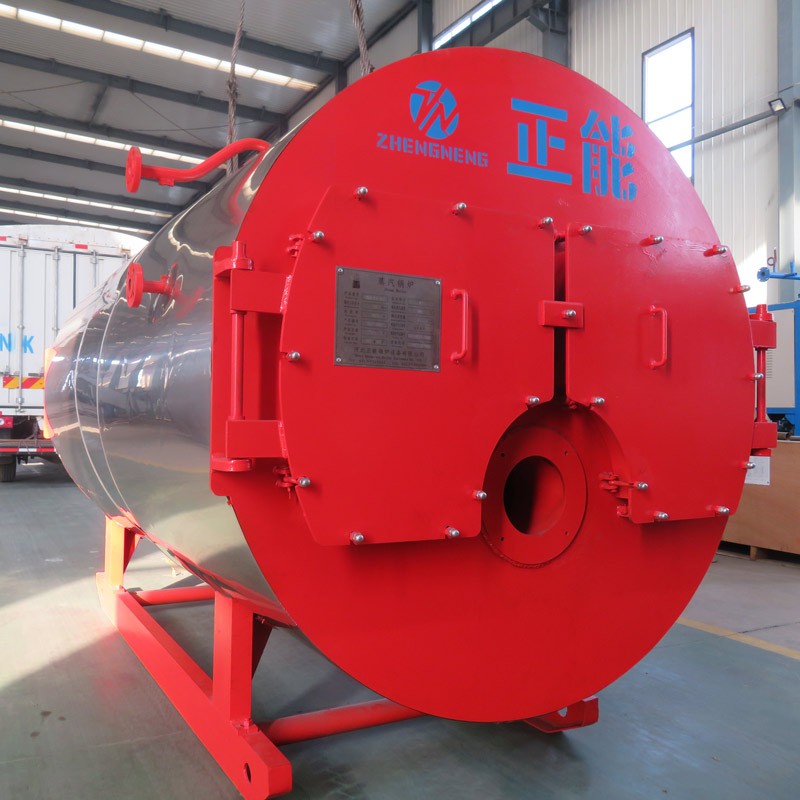
Burner Selection and Design
The burner is a critical component of the steam boiler, as it controls the mixing and combustion of fuel and air. We carefully select burners that are designed for low - emission operation. Modern burners are equipped with advanced features such as pre - mixing technology, which ensures a more uniform mixture of fuel and air before combustion. This leads to more complete combustion and lower NOx emissions. For example, our Condensing Steam Boiler uses state - of - the - art burners that are specifically engineered to meet the most stringent emission standards.
Air - Fuel Ratio Control
Maintaining the correct air - fuel ratio is essential for efficient and clean combustion. An improper air - fuel ratio can result in incomplete combustion, leading to higher emissions of CO and unburned hydrocarbons. Our boilers are equipped with advanced control systems that continuously monitor and adjust the air - fuel ratio based on the boiler's load and operating conditions. This ensures that the combustion process remains optimal at all times, reducing emissions and improving energy efficiency.
Heat Exchanger Design
The heat exchanger plays a vital role in the performance of a steam boiler. A well - designed heat exchanger can enhance heat transfer efficiency, which in turn reduces the amount of fuel needed to generate steam. This not only saves energy but also reduces emissions.
High - Efficiency Heat Exchangers
We use high - efficiency heat exchangers in our low pressure steam boilers. These heat exchangers are designed with a large surface area and a compact structure, allowing for maximum heat transfer between the combustion gases and the water. By recovering more heat from the exhaust gases, we can reduce the temperature of the flue gases leaving the boiler, which also helps to reduce NOx emissions. Our Low Nitrogen Condensing Steam Boiler features a highly efficient condensing heat exchanger that further improves energy efficiency and reduces emissions.
Regular Maintenance
Regular maintenance of the heat exchanger is crucial to ensure its optimal performance. Over time, the heat exchanger can accumulate dirt, scale, and other deposits, which can reduce its heat transfer efficiency. We provide our customers with detailed maintenance guidelines and offer maintenance services to ensure that the heat exchanger in their boilers is kept clean and in good working condition.
Flue Gas Treatment
In some cases, additional flue gas treatment may be required to meet strict emission standards. We offer a range of flue gas treatment solutions for our low pressure steam boilers.
Selective Catalytic Reduction (SCR)
SCR is a proven technology for reducing NOx emissions from combustion processes. It involves the injection of a reducing agent, such as ammonia or urea, into the flue gas stream. The reducing agent reacts with the NOx in the presence of a catalyst, converting it into nitrogen and water. Our WNS Series Steam Boiler can be equipped with an SCR system to achieve ultra - low NOx emissions.
Particulate Matter Filtration
To reduce the emission of particulate matter, we can install particulate filters in the flue gas system. These filters are designed to capture and remove solid particles from the flue gas, ensuring that the exhaust gases meet the required particulate matter standards.
Monitoring and Compliance
Continuous monitoring of emissions is essential to ensure that our low pressure steam boilers are operating within the emission limits. We provide our customers with advanced monitoring systems that can measure the concentration of pollutants in the flue gas in real - time.
Data Analysis and Reporting
The monitoring systems collect data on emissions, which is then analyzed to identify any trends or issues. We generate detailed reports for our customers, which include information on emission levels, boiler performance, and compliance status. This allows our customers to take proactive measures to address any potential problems and ensure that their boilers remain in compliance with the emission standards.
Regulatory Updates
We stay up - to - date with the latest regulatory requirements and ensure that our products are designed and manufactured to meet these standards. Our research and development team is constantly working on improving our boiler technology to adapt to changing emission regulations.
Conclusion
Ensuring that low pressure steam boilers meet emission standards is a complex but achievable goal. By adopting a comprehensive approach that includes combustion optimization, heat exchanger design, flue gas treatment, and continuous monitoring, we can provide our customers with high - quality, low - emission steam boilers.
If you are interested in purchasing low pressure steam boilers that meet the most stringent emission standards, we invite you to contact us for further discussion and procurement negotiation. We are committed to providing you with the best solutions for your steam generation needs while also contributing to a cleaner and more sustainable environment.
References
- American Boiler Manufacturers Association. (2023). Boiler Emission Standards and Regulations.
- International Energy Agency. (2023). Efficiency and Emission Reduction in Steam Boilers.
- U.S. Environmental Protection Agency. (2023). National Emission Standards for Hazardous Air Pollutants (NESHAP) for Boilers.